
Wellbeing & Inclusion Pack
People do their best work when they are well, included, and able to say when they are struggling. Some of that is good leadership. Some of it is the law: where someone is disabled, and that includes many mental health conditions and many forms of neurodivergence, you must make reasonable adjustments. This pack gives your managers the conversation, the framework and the practical tools to support people well, and to meet the duty while you do it. 15 documents, grounded in the Equality Act and the HSE stress standards. Written for employers in Great Britain (England, Scotland and Wales). Northern Ireland has its own disability law and is not covered.
The part that is law
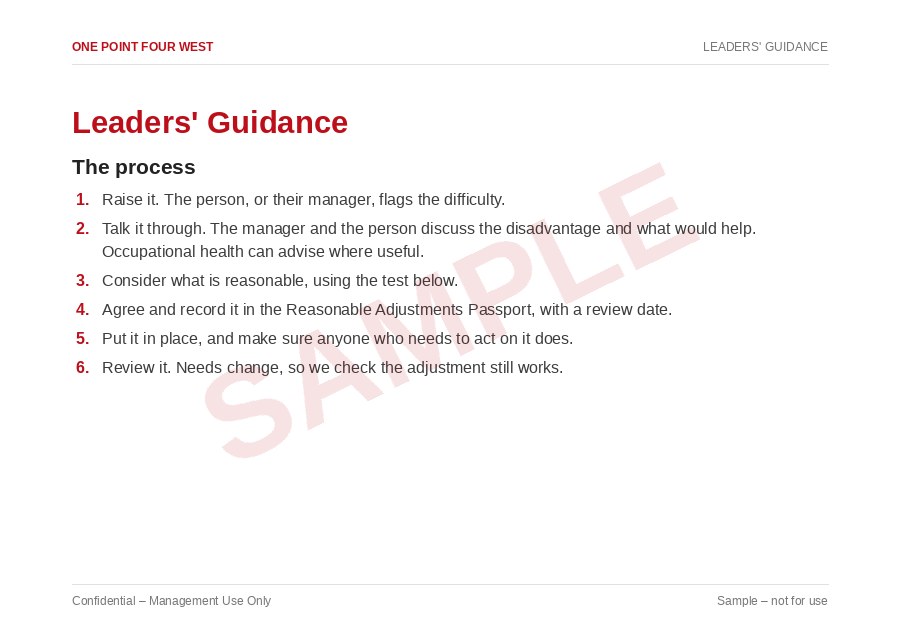
A reasonable adjustments policy, process and passport, built on the Equality Act duty. No diagnosis needed to make a sensible change.
The conversation that does the work
Most wellbeing support happens in one good conversation. A guide your managers can actually use, with what to say and what not to.
Practical and grounded
A work-related stress risk assessment on the HSE Management Standards, neurodiversity guidance, and a passport that travels with the person.
Current to the law in Great Britain
Reasonable adjustments, the definition of disability including mental health and neurodiversity, and the duty to assess work-related stress. Reviewed October 2026.
What's included (15 customised documents)
Guidance
- How to Use This Pack
- Leaders' Guide to Wellbeing and Inclusion
- Wellbeing Conversation Guide
- Supporting Someone Who Is Struggling
Policy & Adjustments
- Mental Health and Wellbeing Framework
- Reasonable Adjustments Policy and Process
- Reasonable Adjustments Passport
- Neurodiversity Guidance
Tools & Templates
- Work-related Stress Risk Assessment (HSE standards)
- Wellbeing Check-in Template
- Return to Work After Mental Health Absence
- Signposting and Support Directory
Inclusion & Governance
- Our Inclusion Statement
- Wellbeing Action Plan and Evidence
- Wellbeing and Inclusion FAQ
- 🔒 Secure payment via Stripe
- ✓ Written by a Chartered FCIPD professional
- ⬇ Instant download after customisation
Frequently asked questions
Do we have to make reasonable adjustments?
If someone is disabled, yes. Under the Equality Act 2010 employers must make reasonable adjustments to remove or reduce the disadvantage a disabled person faces. The duty starts as soon as you know, or could reasonably be expected to know, that someone is disabled and is likely to be at a substantial disadvantage because of it. You do not need a formal diagnosis to make a sensible adjustment. The pack includes a reasonable adjustments policy, process and passport.
Is a mental health condition a disability?
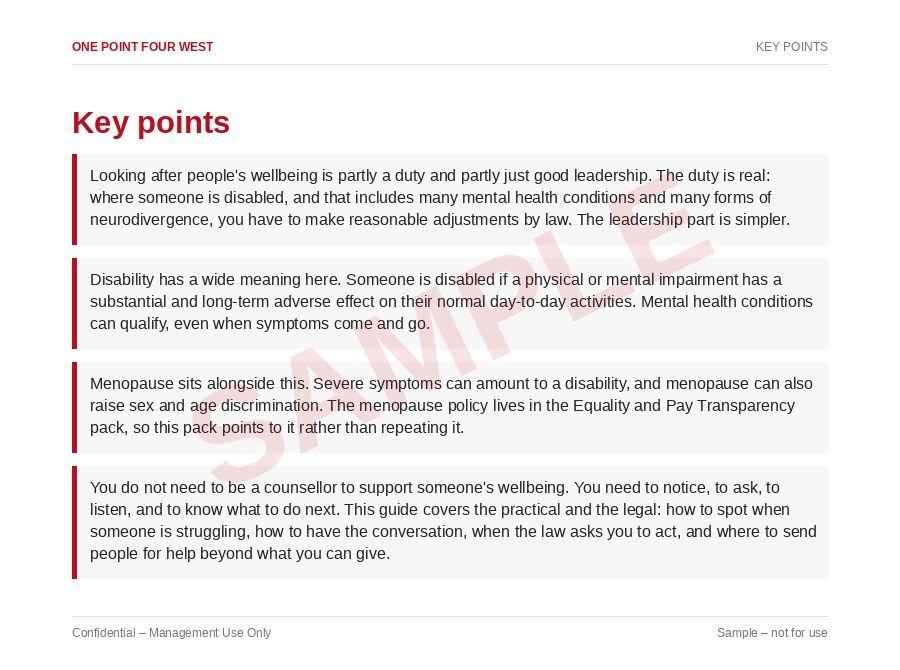
It can be. Someone is disabled if a physical or mental impairment has a substantial and long-term adverse effect on their ability to carry out normal day-to-day activities. Long-term means it has lasted, or is likely to last, at least 12 months, or for the rest of the person's life. A mental health condition can meet that test, even where symptoms come and go.
Is neurodivergence covered?
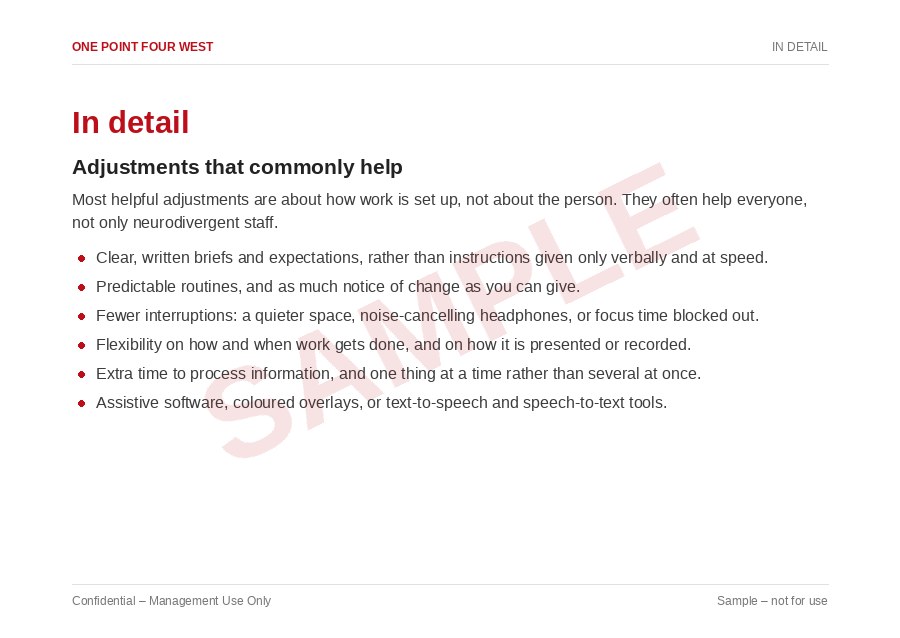
Often, yes. ADHD, autism, dyslexia and dyspraxia will frequently meet the legal definition of disability, even where the person does not consider themselves disabled. The pack includes neurodiversity guidance and the adjustments that commonly help.
Do we really have to assess work-related stress?
Yes. Employers must assess the risks to health at work, including stress, under the Management of Health and Safety at Work Regulations 1999 (reg 3). The Health and Safety Executive recommends assessing six areas: demands, control, support, relationships, role and change. The pack includes a stress risk assessment built around those standards.
Who pays for reasonable adjustments?
The employer pays. Many adjustments cost little or nothing. Access to Work is a government scheme that can pay for extra support beyond reasonable adjustments, such as specialist equipment, a support worker or mental health support at work, and the employee applies for it, not the employer. Access to Work will not pay for what is reasonable for you to pay for yourself. Where a step would cost more than is reasonable for you, a grant may cover the difference, and that can make the step reasonable. So before deciding an adjustment costs too much, check with the person whether Access to Work could help, and help them apply.
Can I edit the documents after download?
Yes. All 15 documents are in Word format and fully editable. Your company details and named contacts are pre-filled by the wizard, and you complete the rest.
Does the pack cover Northern Ireland?
No. The pack reflects the law in Great Britain (England, Scotland and Wales) as at 30 October 2026. Northern Ireland has its own disability and health and safety law and is not covered. The support directory includes Northern Ireland helplines for any staff who live there.
Want to build wellbeing into how you manage?
If you would rather train your managers, stand up a wellbeing approach, or work through reasonable adjustments for a specific situation, get in touch. We can scope it to your organisation.